Cargo insurance pays for what you can prove, not for what happened
The cover is usually adequate and the claim usually fails anyway. The failure is almost always evidence: a survey that was never commissioned, a reservation that was never noted, or a damage that the policy excluded before the goods ever left the factory.
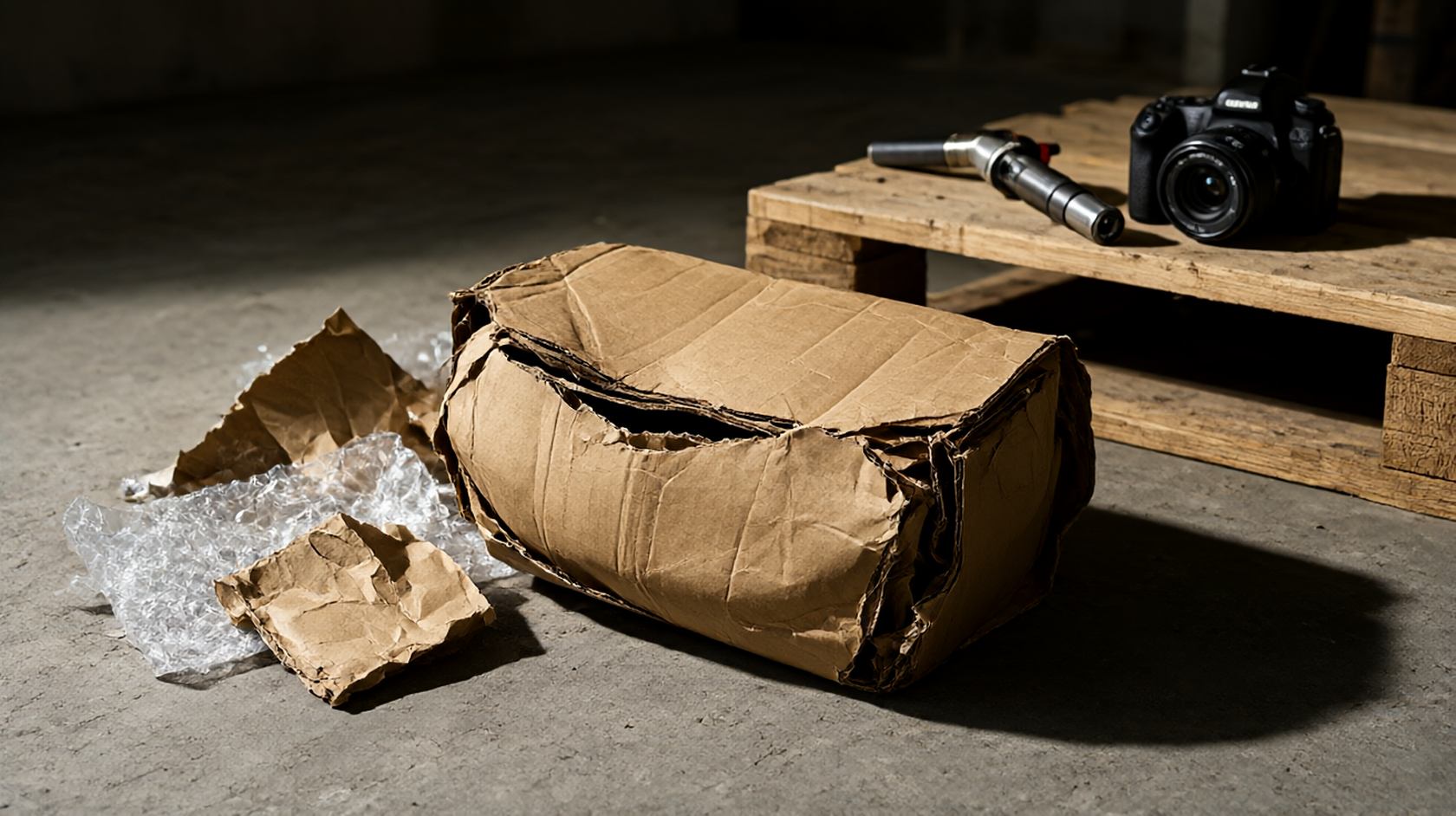
The claim is an evidence exercise
A cargo claim is decided on documents rather than on the merits of the loss. The insurer's obligation is to indemnify a loss that is within the cover and that is proved, and the burden of proving it sits with the insured.
Proving it means establishing three things: that the goods were in the stated condition when the cover attached, that they were damaged or lost during the period of cover, and that the damage was caused by a peril that the policy covers.
Each of the three has a document. The condition at attachment is proved by the packing record and the pre shipment inspection. The damage is proved by the survey. The peril is proved by the carrier's report or by the circumstances.
A claim that is missing any one of the three is a claim that will be negotiated rather than paid. That is why the evidence has to be captured at the time, before anyone knows a claim will be needed.
Two regimes of liability and one gap
The carrier's liability is limited by convention or by contract, and the limit is usually expressed per package or per kilogram, whichever is higher. For high value goods the limit is far below the value.
The cargo policy sits above that limit and covers the difference, which is why the policy is needed at all. A shipper who believes the carrier is liable for the full value has misread the limit, and the misreading surfaces only at the claim.
The gap between the two regimes is the deductible and the uninsured peril. A deductible that is set at a level intended to remove small claims is a deliberate transfer of small losses to the insured, and that transfer should be priced rather than resented.
The practical arrangement is to know the carrier limit per shipment and to size the policy above it, and to know the deductible and to size the internal allowance to it.
What all risks does not mean
The broadest common cover is described as all risks and it is not all risks. It excludes the four causes that produce most cargo damage: insufficient packing, inherent vice, delay and the ordinary leakage of the goods.
Insufficient packing is the exclusion that turns a handling damage into an uninsured loss. A carton that collapses under stacking is not a casualty, it is a packing standard, and the insurer will treat it as the latter.
Inherent vice covers goods that deteriorate because of what they are, such as moisture sensitive materials, foodstuffs and chemicals. The exclusion applies even where the deterioration was accelerated by the transit conditions.
Delay is excluded as a cause of loss, which means that a loss caused by a late delivery is not covered even where the late delivery was the carrier's fault. The loss has to be a physical loss caused by a covered peril.
The packing standard is where claims are lost
A packing standard that is adequate for a domestic van is not adequate for an ocean container, and the difference is not obvious from the outside of a carton. Stacking height, humidity, condensation and handling drops are all higher in the ocean chain.
The policy usually requires packing that is sufficient for the ordinary risks of the transit, and the test is what a competent packer would do. A test shipment, a drop test or a standard referenced in the packing specification is evidence that the standard was met.
Container condensation is the specific hazard that catches exporters of moisture containing goods. The temperature swing across a voyage produces condensation on the container roof, which drips onto the cargo, and the resulting damage is frequently excluded as inherent vice.
The control is a documented packing specification with a moisture barrier or desiccant where the goods require it, and the record of that specification is what converts a condensation claim from excluded to covered.
The reservation on the delivery receipt
Damage that is visible at delivery should be noted on the delivery receipt at the moment of receipt, with a description and with photographs taken before the goods are moved. A clean receipt signed at delivery is evidence that the goods arrived in good condition.
The reservation is a short written statement, not a refusal. A refusal to sign creates a different problem, because the carrier may treat the goods as undelivered and the storage charges begin.
Concealed damage is the harder case, because it is discovered after the receipt has been signed. Most regimes allow a period, measured in days, to notify the carrier of concealed damage, and the period is short and strictly applied.
The practical control is an inspection step in the receiving procedure with a defined window and a defined record. A receiving procedure that unpacks and inspects within the window is a procedure that preserves the claim, and one that stores the pallet unopened for a month is one that does not.
The survey is the claim
A survey is an independent examination of the damage that produces a report stating the cause, the extent and the likely responsibility. Most policies require the insurer to be notified before a survey is arranged, and the surveyor is often appointed by the insurer.
Arranging a survey independently and then presenting the report is a weaker position, because the insurer can dispute the surveyor's method. Notifying first and letting the insurer appoint is the procedure the policy describes.
The survey costs money and the cost is recoverable as part of the claim where the claim succeeds. Where the claim fails the cost is borne by the insured, which is why a survey on a small loss is not always worth commissioning.
The report should state the cause rather than only the damage, because the cause is what decides whether the peril is covered. A report that says the goods were wet is less useful than one that says the container roof condensed.
The document set that decides the outcome
The set is: the policy or certificate, the commercial invoice, the packing list, the transport document, the survey report, the photographs, the repair or replacement quotation and the correspondence with the carrier.
Each document answers a specific question and the set is greater than the sum of its parts. The invoice establishes the value, the packing list establishes what was shipped, the transport document establishes the custody chain and the survey establishes the cause.
The transport document is the document that identifies who had custody when the damage occurred, which is why a clean bill of lading matters. A bill with a remark about the condition of the container is a bill that shifts the argument to the packing.
The correspondence with the carrier is the document most often missing, because the carrier correspondence happens informally. Preserving it is a matter of routing all carrier communication through one channel rather than through whoever is available.
Time limits that are shorter than people expect
Notification of loss is usually required immediately and in writing, and the immediate requirement is applied strictly. A notification three weeks later, however justified, is a notification that may be rejected on timing alone.
The limitation period for bringing a claim is measured in months or in years depending on the regime and the contract, and it runs from the delivery date rather than from the discovery of the loss. A claim discovered late may already be time barred.
The carrier's own limitation period is shorter than the insurer's, which is why the carrier claim has to be filed first even where the insurer is expected to pay. A carrier claim filed late extinguishes the recovery right against the carrier, and the insurer may then reduce the settlement by that amount.
The practical control is a claim calendar built from the delivery dates, with notification deadlines computed at the time of delivery rather than at the time of damage.
General average is a separate obligation
In a general average, a sacrifice made to save the ship and cargo is shared among all the parties whose property was saved. The cargo owner is asked to contribute even where its own goods were undamaged.
The obligation is secured by a general average bond and by a guarantee, and goods can be held at destination until the security is provided. That is the mechanism that turns a maritime casualty into a cash demand at the port.
Cargo insurance usually covers the general average contribution, which is why the policy should be checked for that cover rather than assumed. A policy without it leaves the cargo owner exposed to a demand it did not budget.
The practical preparation is to know in advance who will sign the bond and who will provide the guarantee, because the demand arrives with a deadline measured in days and the goods are held until it is met.
Choosing the insured value
Three values are in play: the invoice value, the landed cost and the replacement cost. The invoice value is the minimum most policies require, the landed cost adds freight and duty, and the replacement cost adds the cost of buying again at today's price.
Insuring at the invoice value leaves the freight and the duty uninsured, which means a total loss reimburses the goods but not the cost of getting them. For goods with a high freight component that is a material gap.
Insuring at the replacement cost is the correct choice for goods whose price moves, because the indemnity then covers the cost of restoring the position rather than the cost of the original purchase.
The premium difference between the three is small relative to the gap, so the choice should be made on the basis of what a loss would actually cost rather than on the premium. Most underinsurance is a decision nobody remembers making.
The claim file this note specifies is described in freight insurance claims on bulk orders, and its document set is what converts a loss into a settlement.
- Capture condition at attachment with a packing record and a pre shipment inspection.
- Know the carrier's per package or per kilo limit for every lane.
- Size the policy above the carrier limit and the internal allowance to the deductible.
- Write a packing specification that covers stacking, humidity and condensation.
- Note visible damage on the delivery receipt with photographs before moving goods.
- Run a receiving inspection inside the concealed damage notification window.
- Notify the insurer before commissioning a survey and let the insurer appoint.
- Require the survey report to state the cause, not only the extent.
- Preserve carrier correspondence in one channel for the claim file.
- Build a claim calendar from delivery dates with computed notification deadlines.
- Confirm general average cover and pre assign who signs the bond.
- Insure at replacement cost where the goods price moves rather than at invoice value.